The particles that wear out a filter are the ones you never see. Pollen, pet dander, cooking grease, and the fine gray dust that settles on every shelf keep loading the pleats long before a 11.5x11.5x1 filter ever looks dirty. In a slim one-inch size like this one, that hidden buildup happens faster than most homeowners expect.
I’ve pulled hundreds of these out of return grilles, and the pattern holds. An air filter loses ground well before it looks the part, and some homes run through one far quicker than the calendar says. What I want to hand you here are the signals I watch for and the conditions that shorten a filter’s life, so you can keep your home’s air clean on a schedule that fits your house. When the time comes, selecting the right 11.5x11.5x1 air filter for your home is the simple part.
TL;DR Quick Answers
- Swap this filter every 60 to 90 days, and sooner with pets, allergies, dust, or smoke, so you get the full life from a filter.
- Skip the look test. Weaker airflow and dust that comes back fast both arrive before the filter looks dirty.
- Check this slim one-inch size every month, because it loads faster than a thick filter.
- Higher-MERV filters trap finer particles, so they can need a closer look in a busy home.
- Set a phone reminder, or set up automatic filter deliveries, and the change stops slipping past you.
Top Takeaways
- A filter fades before it looks dirty, so judge it by how your home feels and runs, not by its color.
- Faster dust, weaker airflow, longer run times, and more sneezing are your early warnings.
- Pets, allergies, dust, smoke, and heavy runtime each shorten a filter’s life.
- A one-inch filter loads sooner than a thick one, so check this size monthly and confirm your filter size before you buy.
- Higher-MERV pleated filters that capture more trap finer particles, though they fill faster in a busy home.
- Build your schedule around your house, not a generic 90-day rule.
What Tells Me a Filter Is Past Its Prime
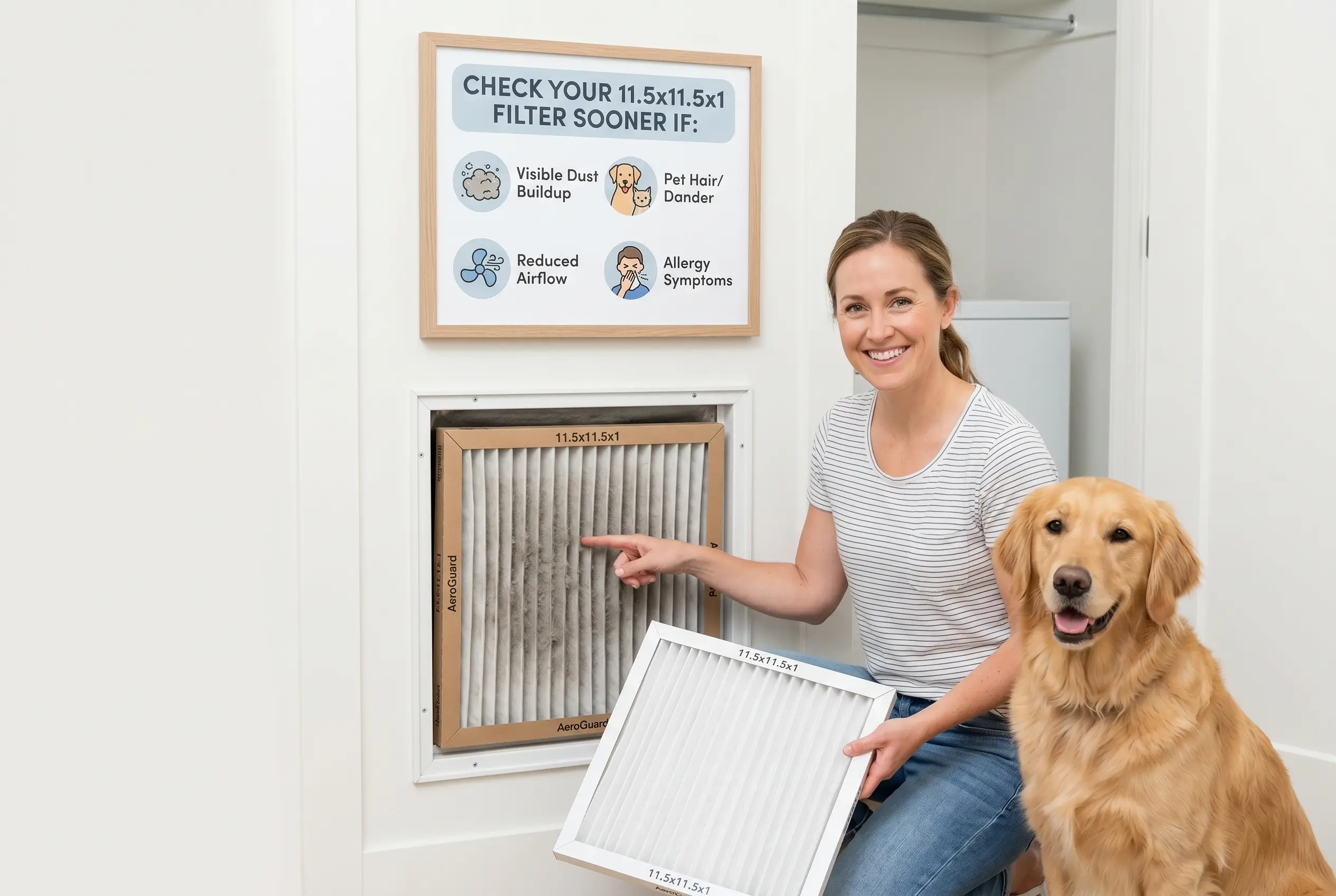
A failing filter shows itself through performance long before appearance. These are the signals I trust:
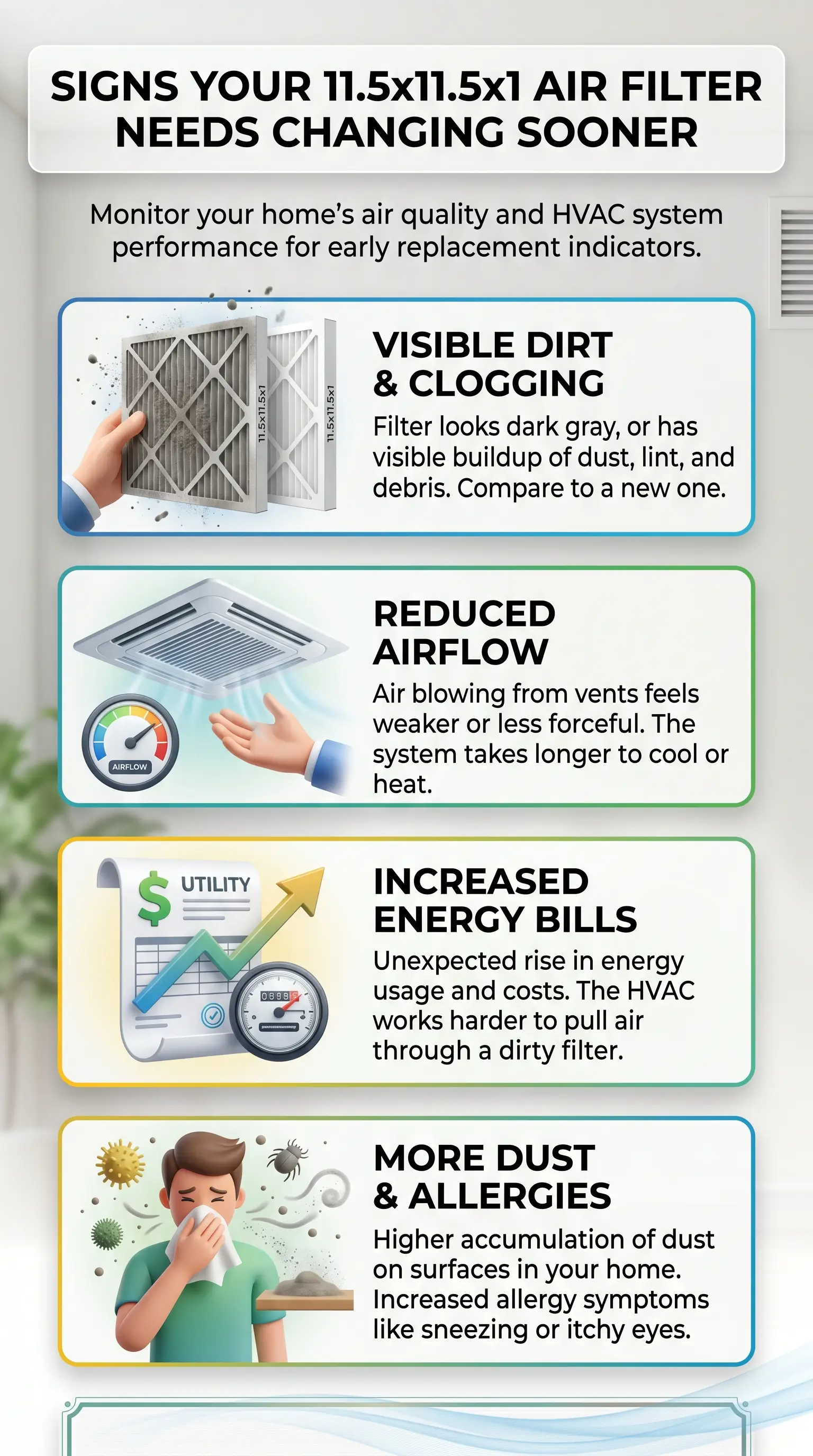
- Dust returns fast. Wipe a shelf today, and if the haze is back in a day or two, the filter is letting fine particles ride the air straight back into your rooms.
- Airflow weakens. Hold your hand near a supply vent. A softer push than you remember means air is straining through clogged pleats.
- Cycles stretch out. When the system runs past its usual rhythm to reach the thermostat setting, restricted airflow is a prime suspect, and catching it early helps you head off costly repairs.
- Allergies act up indoors. More sneezing, congestion, or itchy eyes at home often traces straight back to a filter that can no longer hold what it used to.
- A musty note shows up. A faint stale smell near the return or the vents points to buildup the filter no longer catches.
- The pleats look loaded. Even gray across the media means it has taken on about all it can hold. Wait until it looks black, and you have waited too long.
Why Some Homes Burn Through Filters Faster
Every 60 to 90 days fits an average home. Plenty of homes are not average, and these conditions pull the timeline shorter:
- Pets. Dander and shed hair pack a filter quickly, and a second animal speeds that right up.
- Allergies or asthma at home. Clean air matters even more under this roof, so a fresher filter earns its keep.
- Dust and renovation. Sanding, remodeling, nearby construction, or a dry, dusty lot fills a filter well ahead of schedule.
- Smoke and fine particles. Cooking, candles, tobacco, and wildfire-season haze all pile on, which is where extra defense against airborne germs helps.
- Heavy runtime. Through peak summer and winter the system moves more air, so the filter collects more, and a better-insulated attic takes some of that load off.
- The slim build. A one-inch filter carries less media than a thick one, so this size clogs sooner. Check it monthly.
A quick word on ratings. A higher MERV filter grabs more of the fine particles you actually care about, though denser media can fill faster in a busy home. Run a higher-rated filter with pets or allergies in the house, and you will want to look at it more often, not less. Plenty of affordable pleated upgrades reach that higher rating without the premium price.
“In my years on the filtration side, the homes that stay cleanest aren’t the ones with the most expensive equipment. They’re the ones where someone checks the filter on a set rhythm and replaces it before it ever begs to be replaced.”
Seven Resources Worth Bookmarking for Cleaner Air
Each one comes from an independent authority, not a filter seller, and each gives you something useful.
- The EPA guide to home air cleaners shows how filtration works alongside source control and ventilation.
- ENERGY STAR heating and cooling tips tie a simple filter-check habit to your system’s efficiency.
- The Department of Energy filter maintenance guide explains how a clean filter protects the rest of your equipment.
- The American Lung Association air cleaning guide breaks down filter ratings and change intervals in plain language.
- Mayo Clinic allergy-proofing steps walk you through cutting indoor allergens room by room.
- The AAFA indoor air quality checklist lays out ways to lower triggers for allergy and asthma households.
- The MedlinePlus air pollution overview covers the health basics on what indoor air carries.
Three Numbers That Make the Case for a Fresh Filter
- Indoor air often carries two to five times more pollutants than the air outside, according to the EPA’s indoor air quality guide. A tired filter just lets more of that keep circulating.
- Close to 25 million Americans live with asthma, reports the CDC’s national asthma data, and indoor dust and dander rank among the triggers a clean filter helps hold back.
- Airflow trouble, exactly what a clogged filter creates, can cut a system’s efficiency by as much as 15 percent, says the ENERGY STAR maintenance checklist.
My Honest Take After Years of Watching Filters Load Up
If one habit matters most, it is the monthly look. Pull the filter, hold it up to the light, and decide on what you see instead of the date on the calendar. That one minute, plus the basics that keep your system running its best, tells you more than any rule of thumb.
On this slim size, my opinion is plain. With only an inch of media to work with, I lean toward the early end of any window, and I treat pets, allergies, and dusty stretches as reasons to move sooner. A filter is one of the cheapest parts of your whole system and one of the most important to your family’s air, so I would rather change it a little early than run it a week long. Stick with dependable replacement filters, and if the unit itself is well past its prime, upgrading an aging system can save more than any filter ever will.
Frequently Asked Questions
How do I know my 11.5x11.5x1 filter needs changing? Watch for dust that returns quickly, a softer push at the vents, longer heating or cooling cycles, and more allergy symptoms indoors. Any one of these can show up before the filter looks dirty.
How often should I replace it? Every 60 to 90 days fits most homes, and sooner with pets, allergies, dust, or smoke. A quick monthly check keeps you from guessing, and filters that cut household odors are worth it when cooking or pets leave a smell behind.
What makes a filter wear out faster? Pet dander, household dust, renovation, smoke, heavy runtime, and denser high-MERV media all fill a filter ahead of schedule. Pairing your changes with a professional tune-up keeps the whole system in balance.
Does a higher MERV mean I change it more often? It can. Higher-rated media catches more, so in a home with pets or allergies it may load faster and deserve a closer look.
Can I just clean this filter instead of replacing it? Most one-inch pleated filters are disposable, not washable. Cleaning one usually wrecks the media, so replacement is the reliable move, and it costs far less than ignoring airflow until you are pricing out what a replacement costs for the whole system.
Make the Next Change the Easy One
Take a couple of minutes to confirm your filter size and set a recurring reminder for the next check. A clean filter on a steady schedule keeps your home’s air fresher and your system running the way it should, and when a bigger question comes up, you can always grab a free system estimate.
Learn more about HVAC Care from one of our HVAC solutions branches…
Filterbuy HVAC Solutions - Miami FL - Air Conditioning Service
1300 S Miami Ave Apt 4806 Miami FL 33130
(305) 306-5027
https://maps.app.goo.gl/Ci1vrL596LhvXKU79